
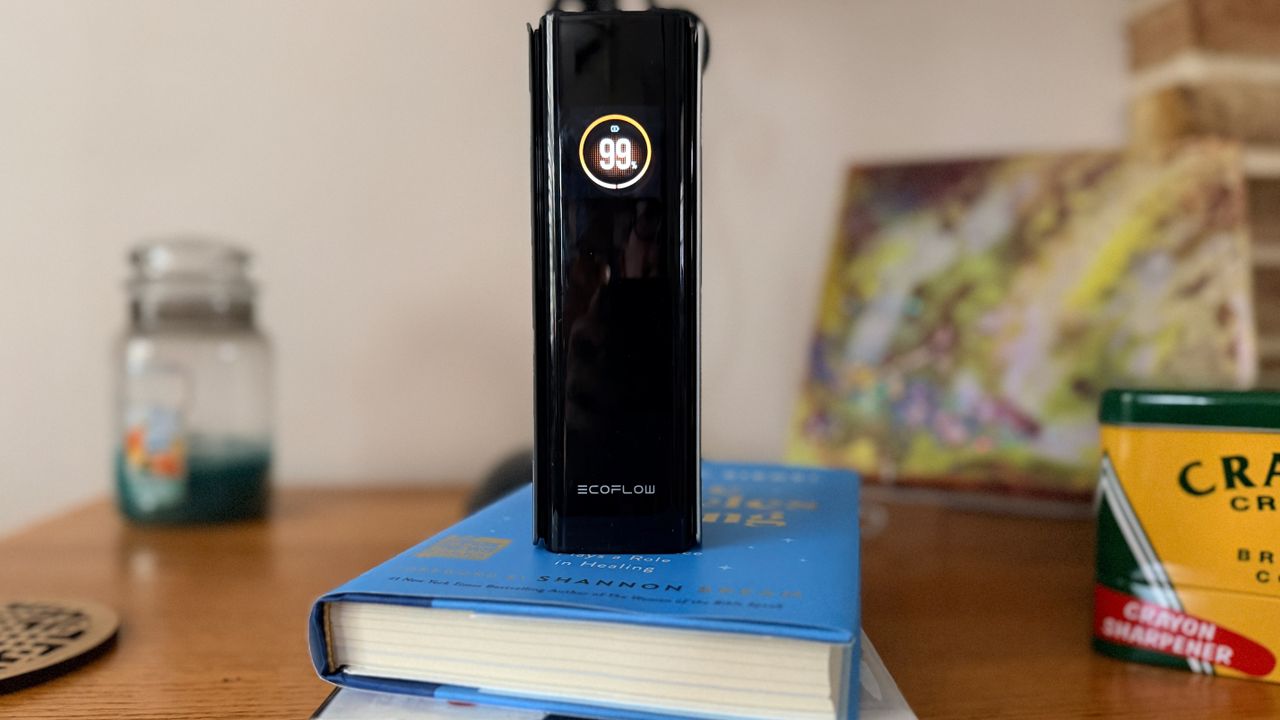

I bought the EcoFlow Rapid strictly for travel over the summer, but it ended up living on my nightstand. The outlet in my bedroom is blocked by the headboard, so keeping this battery on the table makes it way easier to charge my iPad while reading in bed. Nothing fancy, but it solved a daily annoyance right out of the box.
It’s a fantastic way to beat charging woes even at full price – as I detail below. But US and UK readers can grab it for up to half-price, with the EcoFlow Rapid Power Bank down to $60 (was $130) at Amazon, while in the UK, the Rapid is now £65 (was £100).
At 25,000mAh (roughly 90 watt-hours), it sits right under the 100Wh limit TSA and most airlines set for carry-ons. Output maxes out at 170W total across two 140W USB-C ports and a 33W USB-A port—plenty of overhead to fast-charge a laptop and phone simultaneously without throttling either.
Recharging is equally quick: feeding it 140W gets the battery to 50% in about 20 minutes, which takes the stress out of low-battery warnings before a flight. There’s a small color TFT display on the front that shows battery percentage and what’s flowing through each port, so you’re not guessing whether it’s actually charging or just warm.
EcoFlow also includes in the usual protections you’d want in something you’re tossing in a bag next to your laptop: overcharge, overheat, and short-circuit protection, along with a fire-resistant housing.
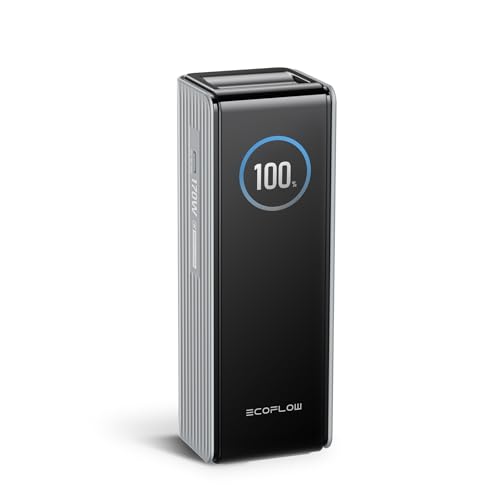
I found this power bank the best way to solve my charging problems thanks to the three ports that let me fast-charge my laptop and iPad.
In the UK: now £65 (was £100)View Deal
Where it actually earns its keep
Bedside, mostly. I like having my iPad plugged in while I half-watch something before I drift off, and I was sick of the nightly math: is there an outlet on this side of the bed, and is the cable even going to reach? Now the bank just lives on the nightstand and takes care of both problems at once.
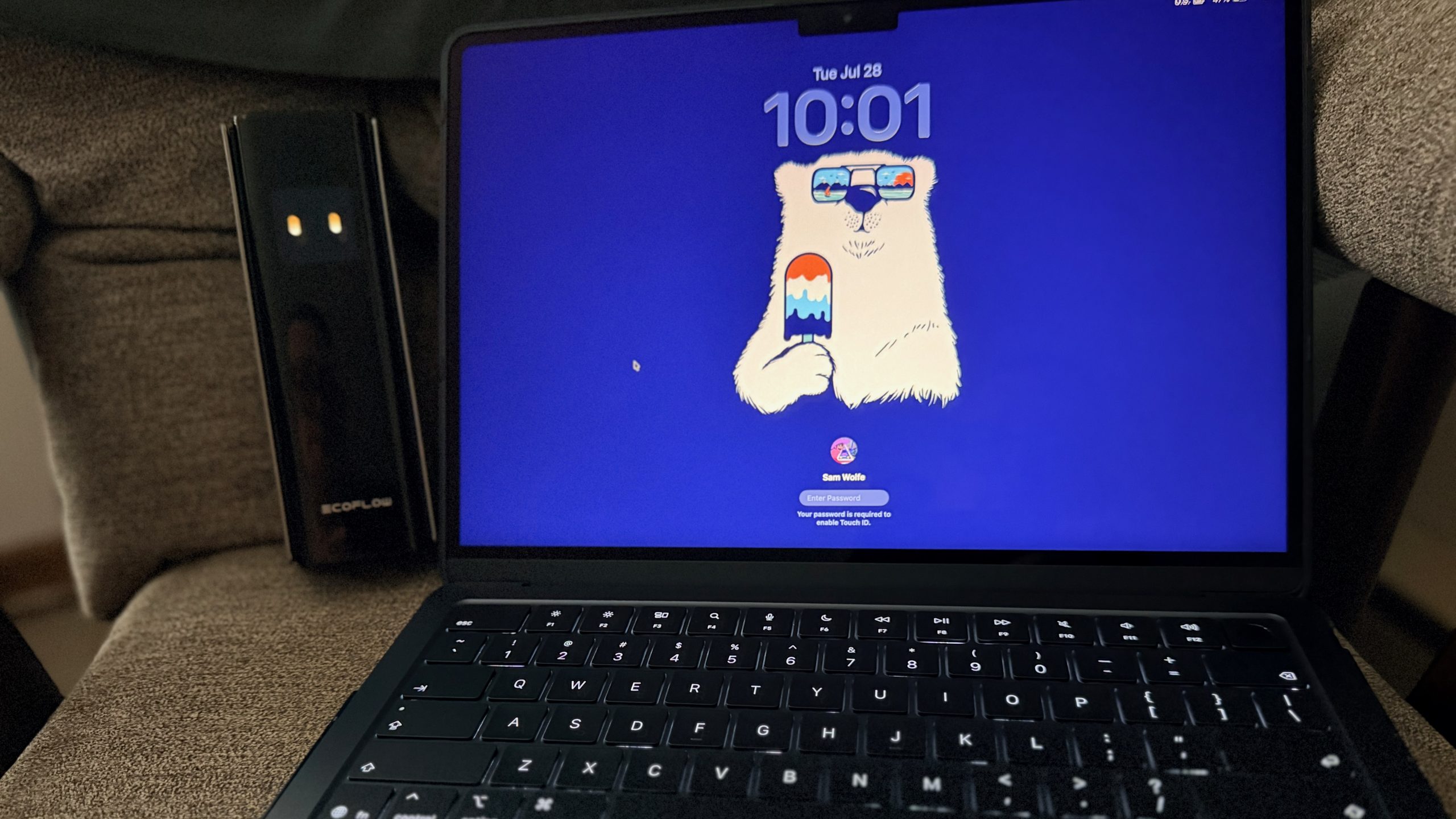
Vacations are the other place it’s become non-negotiable. On a trip, this thing is doing the work of what used to be three separate chargers: phone, tablet, and whatever camera or laptop
I’ve brought along, and because it clears TSA’s carry-on limit, I’ve never had it questioned at security. Hotel rooms are notorious for having exactly one usable outlet near the bed, usually behind a nightstand you can’t move, and having a full day of charging sitting in reach solves that without rearranging furniture.
Conferences are a battery killer. At a trade show a few months ago, my phone hit 20% before noon just from taking photos and answering Slack messages. The only nearby outlet had four different cables running out of it across the floor. I stopped hunting for plugs after that. Now I just charge my phone between talks and run a cable out of my bag to my laptop when it gets low.
It’s also a solid answer for anywhere a plug isn’t guaranteed: a long flight, a road trip, a power outage at home, or a coffee shop where every outlet is already taken. That’s really the point of a bank this size; it’s not built for one scenario, it’s built for the gap between wherever you are and the nearest working outlet.
A few things worth knowing before you buy
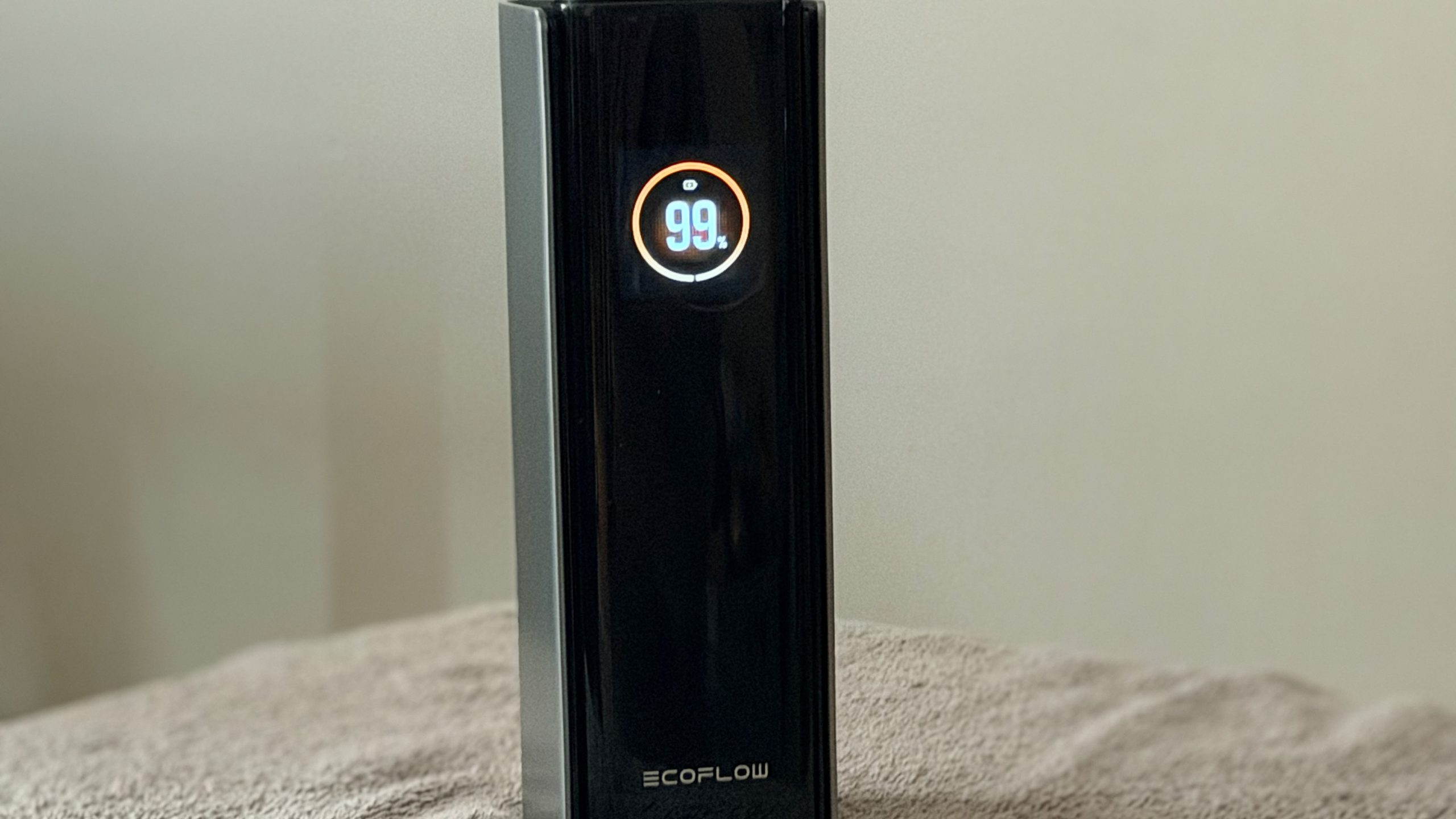
At just over a pound and roughly the size of a large candy bar, it’s not the smallest power bank on the market, and that’s a deliberate tradeoff for the output it delivers. If you only ever need to top off a phone, something smaller and lighter will do the job with less bulk in your bag. It also doesn’t do wireless charging; everything works through the USB-C or USB-A ports, so you’ll need a cable regardless of what you’re charging.
One more thing worth noting: that 170W is a shared pool, not per-port. Plug in a laptop, a phone, and a set of earbuds at the same time, and the bank splits that 170W across all three rather than giving each one its own full rating. I’ve never actually perceived a slowdown using it that way, but don’t expect three devices each pulling 140W simultaneously; that math just doesn’t work.
For what it’s actually meant to do- keep me charged through a flight, a conference floor, or just a lazy night in bed with the iPad- it’s been reliable enough that I stopped thinking about battery anxiety altogether. That’s a low bar to clear on paper, but it’s exactly what made me trust it enough to bring it everywhere.
For more top picks, see our guide to the best power banks we’ve tested.
![[Aggregator] Downloaded image for imported item #161281](https://kcmicro.com/wp-content/uploads/2026/07/h2fEJR2KPmshJMuV2v4SpF-1280-80-1-800x500.jpg "[Aggregator] Downloaded image for imported item #161281")
![[Aggregator] Downloaded image for imported item #161254](https://kcmicro.com/wp-content/uploads/2026/07/yTNrDqajHjmxN5dy9DkvdR-1280-80-800x500.jpg "[Aggregator] Downloaded image for imported item #161254")
![[Aggregator] Downloaded image for imported item #161212](https://kcmicro.com/wp-content/uploads/2026/07/V8hNUHgsbbUGXG69zbk287-1280-80-800x500.jpg "[Aggregator] Downloaded image for imported item #161212")