
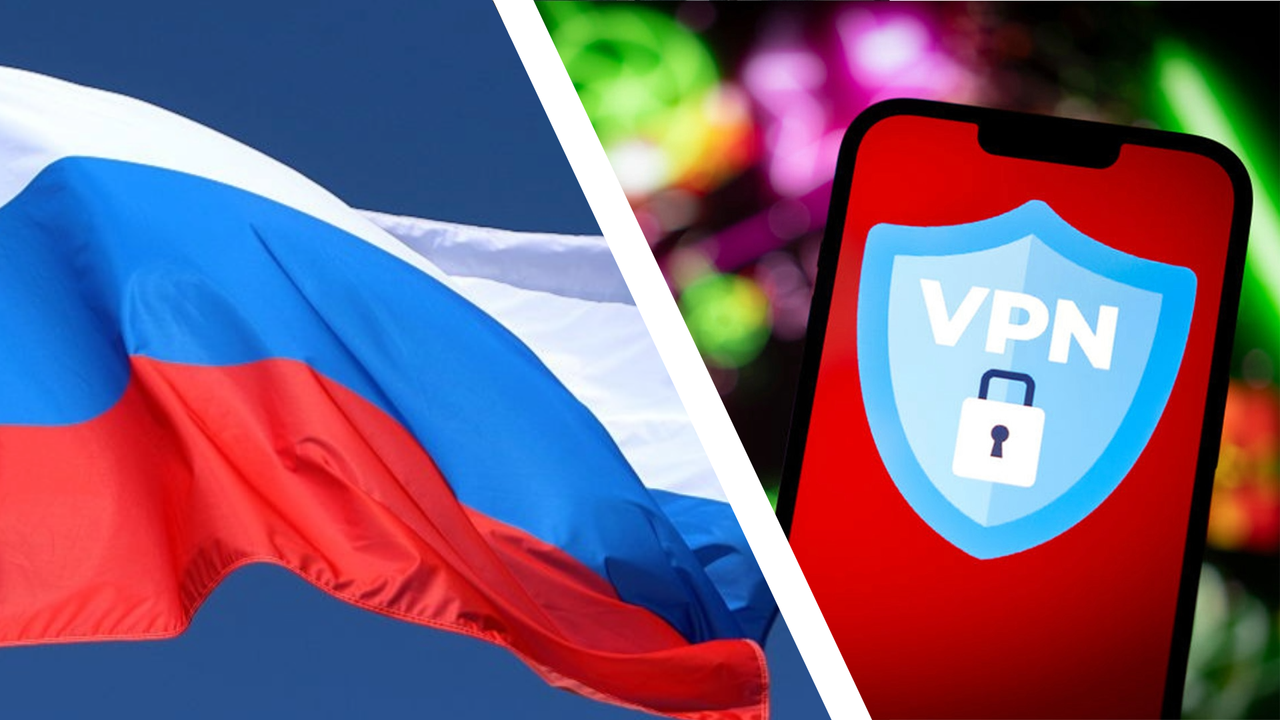

- On August 4, users in Russia reported widespread disruptions to 20+ VPNs
- The attack targets the IPs and entire subnets of major hosting providers
- On August 5, connectivity appeared to have been restored for some
Citizens attempting to bypass Russia’s stringent digital censorship are facing fresh obstacles, as a new wave of aggressive government blockages has knocked numerous popular VPN services offline.
On August 4, users across the country reported severe connectivity issues, as reported by Meduza, a Russian independent news outlet. The restrictions appear to have affected more than 20 popular services, making it increasingly difficult for citizens to connect to an open internet.
If you rely on circumvention tools to access independent news, finding the best VPN apps that work in Russia is more crucial than ever. However, this latest blackout suggests the Russian state communications regulator, Roskomnadzor, is deploying more sophisticated methods to sever the country’s digital lifelines.
These ongoing blockages are becoming a daily reality for citizens, proving that Russians need a VPN to access Google and Apple as unexplained nationwide outages hit core web infrastructure.
On his Telegram channel, Leonid Volkov, an executive at the Anti-Corruption Foundation (FBK), described the current offensive against independent services as “the largest in history,” though the exact scale of the disruptions remains difficult to quantify.
A new era of internet censorship in Russia
The recent outages appear to involve broad, aggressive network restrictions.
According to Russian tech outlet SecurityLab, these new restrictions have targeted the IP addresses and entire subnets of major hosting providers, taking a blunt-force approach to network censorship.
Specifically, Volkov speculated on Telegram that Roskomnadzor’s enhanced blocking capabilities might stem from data harvesting. He suggested that domestic Russian applications, such as banking and marketplace apps, could be tracking users and feeding a massive database of IP addresses to state censors for targeted strikes.
This wave coincides with reports that Russia’s Ministry of Digital Development (Mintsifry) is planning to tighten control over corporate VPNs.
Sources suggest the government wants to establish a continuous monitoring mechanism with hosting providers to quickly exclude disguised circumvention tools from a whitelist of permitted corporate IP addresses. This aligns with ongoing fears that Russia’s solution to its VPN crackdown is a state-owned VPN.
Paper VPN is among the services publicly acknowledging connectivity issues, with some users reporting completely broken connections while others simply experience slower speeds.
In a post published on Wednesday (August 5), the company confirms that “the connection has been restored for most users.”
Amnezia VPN — which recently strengthened its apps to fight Russia’s new approach to VPN blocking — was caught up in the government’s wider summer crackdown. The provider previously restored its premium service in Russia following a devastating state-sponsored cyberattack that lasted a month and a half.
Regarding the August 4 wave, however, the provider stated on its channels that its service is “working reliably” in Russia.
“Friends, over the past two days we have seen many reports of massive blockages of other VPNs. Not long ago this happened to us, but the new wave did not affect us,” wrote Amnezia VPN, adding that the team is also currently testing a new “Greenland” location for bypassing whitelists.
TechRadar has reached out to the provider for further comment on the current situation. We will update this story as we learn more.
![[Aggregator] Downloaded image for imported item #164093](https://kcmicro.com/wp-content/uploads/2026/08/ybhcbdiV5KXXfQyCkShdfD-1280-80-800x500.jpg "[Aggregator] Downloaded image for imported item #164093")
![[Aggregator] Downloaded image for imported item #164097](https://kcmicro.com/wp-content/uploads/2026/08/xiF2oa9QT4q5sePeRdA8Af-1280-80-800x500.jpg "[Aggregator] Downloaded image for imported item #164097")
![[Aggregator] Downloaded image for imported item #72754](https://kcmicro.com/wp-content/uploads/2025/12/YQaVTQE6JAfu6bvPgwmd5U-1280-80-800x500.jpg "[Aggregator] Downloaded image for imported item #72754")